Tin Can Alley
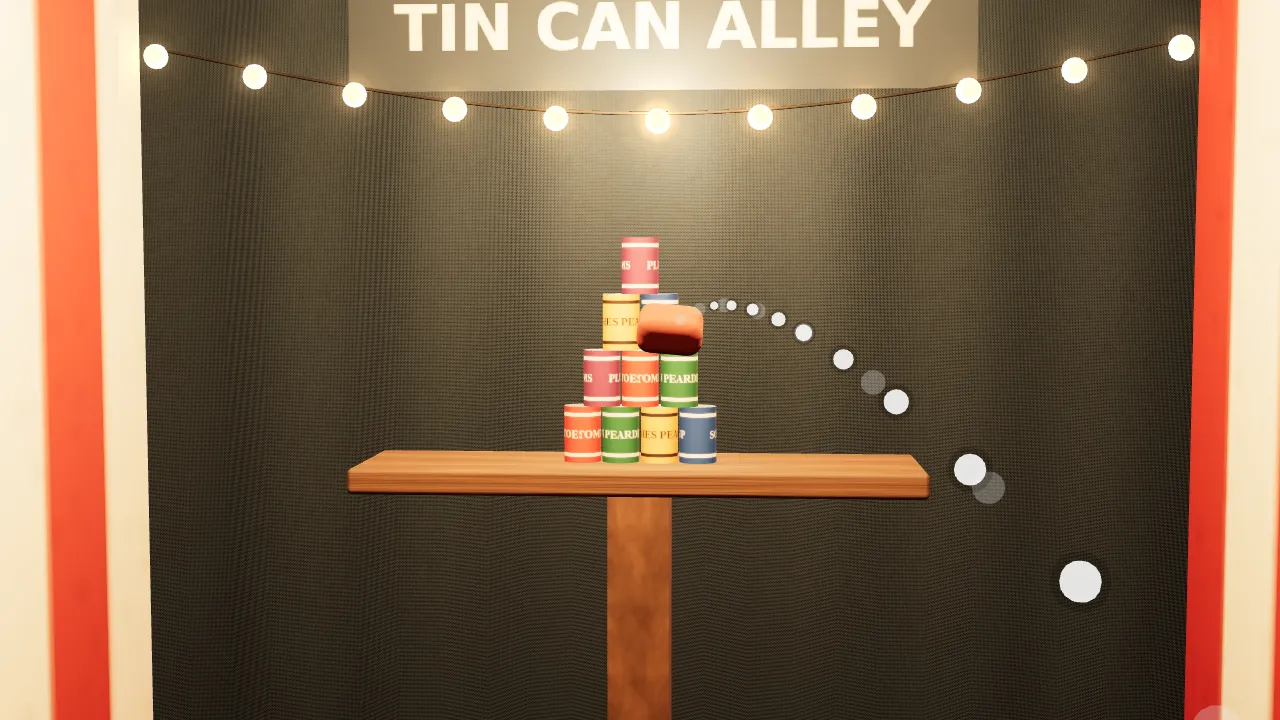
Throw bean bags at a pyramid of tin cans at a fairground stall.
How to play
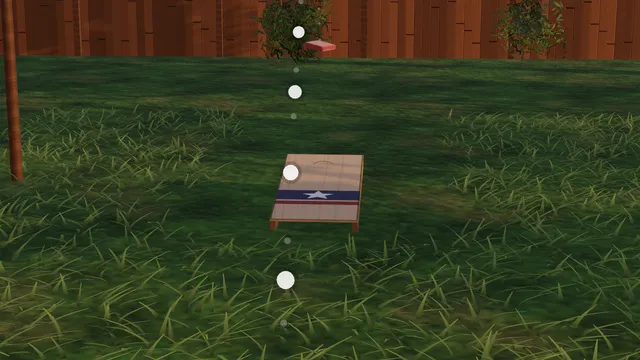
- Drag back from anywhere and let go to throw a bean bag. Pull harder for a faster, flatter throw that hits higher up the pyramid.
- Drag a little left or right to aim at one side. The dots show the first part of the throw.
- You get three bags per pyramid. Tap the brass bell on the counter to have the cans stacked again at any time.
- Try the three Challenges, or switch on weighted bottom cans in Lab to feel an old fairground trick.
Challenges
- Knock down three cans or more with one bean bag
- Clear the whole pyramid with your three bean bags
- Knock off only the top can and leave the other nine standing
Try this
- Throw softly at the bottom row, then hard at the top. Which knocks down more cans, and why?
- Aim at the can on the end of the bottom row. The cans above it lose their support and the whole side comes down.
- Turn on weighted bottom cans in Lab. A throw that cleared the pyramid now leaves the base standing.
Fun facts
- Tin cans are mostly steel. A very thin coating of tin on the inside and outside stops the steel from rusting.
- Momentum is mass times velocity. A 120 g bean bag at 9 m/s carries about 1.1 kg·m/s, as much as a 60 g empty can moving at 18 m/s.
- A bean bag hardly bounces: most of its energy goes into squashing the bag and shuffling the beans inside, so it drops almost straight down after a hit.
Why a bean bag knocks cans flying: momentum and impulse
Tin can alley is a lesson in momentum. A moving bean bag carries momentum, its mass times its velocity. When it hits a can, the two push on each other with equal and opposite forces for a few thousandths of a second. That push, added up over time, is called the impulse, and it is exactly the momentum the bag loses and the can gains.
Light cans, heavy bag
An empty food tin weighs about 60 grams, while the bean bag weighs 120 grams. Because the can is the lighter of the two, even a modest throw gives it a big change in speed. In this game a bag at 7 to 8 m/s sends a struck can off at several metres per second, far more than it needs to fall. The bag itself keeps going a little more slowly, then flops down.
Toppling, not just sliding
A can falls over only if it rotates far enough to lift its centre of mass over the edge of its base. A blow high up the can gives it a strong spin and it tips easily. A blow low down mostly makes it slide. A glancing blow can make a can wobble and settle back on its base. That is why hits sometimes clank without a can falling.
Pyramids fall from the bottom
Each can in the pyramid rests on the two below it. Knock out a can in the bottom row and the cans it was holding up lose their support, so gravity brings them down too. A low throw into the middle of the base usually takes out the most cans. Hitting only the top can is much harder: the bag must pass just above the third row, which takes a faster, flatter throw.
Why bags drop and balls bounce
A bag is soft. It squashes, the beans shuffle, and most of its kinetic energy turns into heat and noise, so it barely rebounds. A bouncy ball of the same mass and speed would deliver more impulse, because its momentum reverses instead of just stopping. Bean bags are gentler and safer, which is why they are used here.
For the curious
For a collision along the line between the centres, the impulse is J = (1 + e)·mr·v, where v is the closing speed, e is the restitution (0.15 for bag on tin here) and mr = mbag·mcan / (mbag + mcan) is the reduced mass, 40 g for these two. The can then gains speed Δv = J / mcan. Each can is a cannon-es rigid cylinder 73 mm across and 110 mm tall, the size of a standard food tin, stepped 240 times a second, and every contact also turns the can, which is what lets it topple. The bag flies with gravity and air drag through the same equations as the dotted preview.
Questions people ask
Where should you aim in tin can alley?
For the most cans, aim low at the middle of the bottom row. Taking out the base brings down the cans resting on it. To hit higher up, throw harder and flatter.
Why do some cans not fall over even when they are hit?
A can topples only if the hit spins it far enough to lift its centre of mass over the edge of its base. A slow bag, a glancing blow or a hit low down may just make it slide or wobble.
Is a bean bag or a ball better for knocking down cans?
For the same mass and speed, a bouncy ball gives a bigger impulse, because its momentum reverses instead of just stopping. A bean bag is softer and safer and drops straight down, which keeps the game calm.