Sandcastle and the Tide
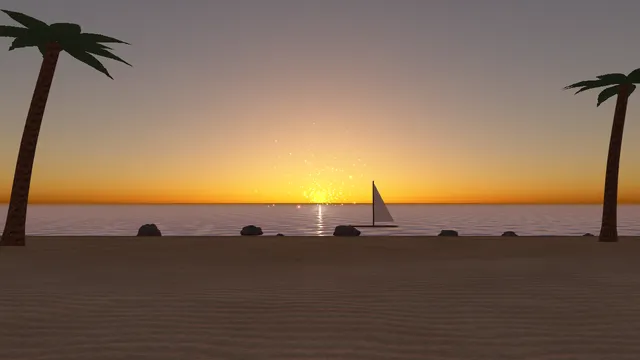
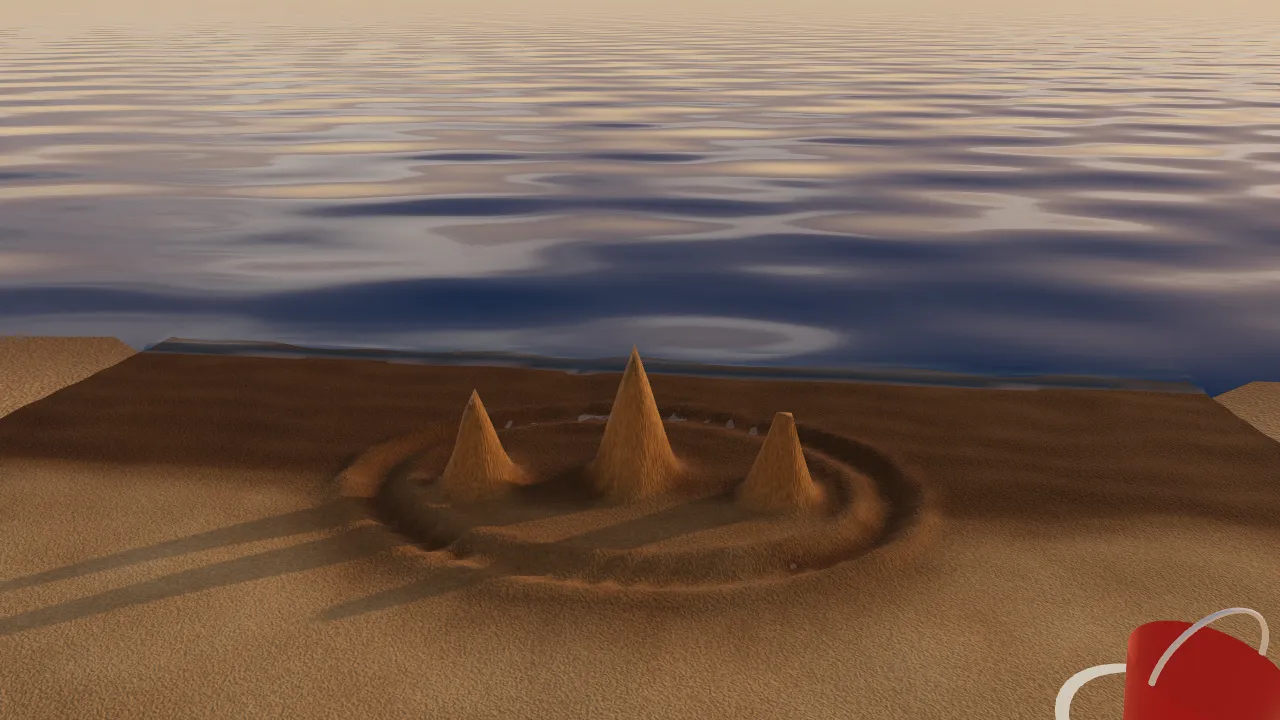
Build a sandcastle on a golden beach and see how long it lasts.
How to play
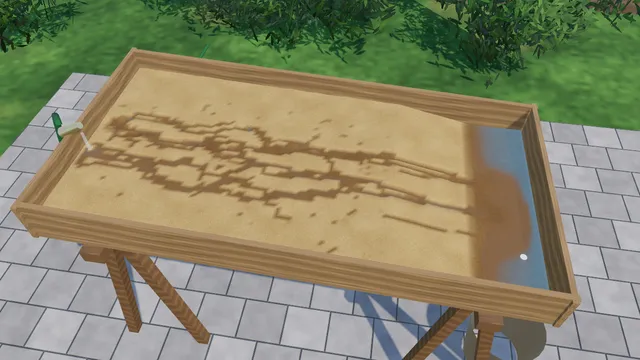
- Drag on the sand to pile up damp sand from the bucket. Hold still in one place to build a tall tower.
- Tap the spade to pick it up, then drag to dig. The sand you dig lands beside the hole, so a moat comes with a wall.
- Tap the sea to call in a bigger wave. The tide also creeps in and out, so the waves reach further up the beach.
- Try the three Challenges, or open Lab to hold the tide still or smooth the beach.
Challenges
- Pile damp sand into a tower 30 cm tall
- Dig a moat round your castle and let a wave fill it
- Keep a castle at least 15 cm tall standing through three waves that reach it
Try this
- Build one castle low on the beach and one high up. The low one soaks from its base and slumps as soon as the waves reach it.
- Pile a long wall of sand between your castle and the sea, and count how many more waves the castle lasts.
- Hold the tide at its highest in Lab and watch where the swash stops. That line is where the sand turns from soaked to damp.
Fun facts
- Damp sand builds the best castles: tiny bridges of water between the grains pull them together. Too much water floods those bridges and the grains slide apart.
- Dry sand piles up to a slope of about 30 to 35 degrees, which is called its angle of repose.
- The thin sheet of water that rushes up a beach after a wave breaks is called the swash, and the water running back down is the backwash.
- Most coasts have two high tides and two low tides in a little under 25 hours, so high tide comes about 50 minutes later each day.
Why damp sand stands up and wet sand falls down
Try to build with dry sand and you get a low cone: the grains roll over each other until the slope is about a third of a right angle, the sand’s angle of repose. Add a little water and the same sand can stand in walls almost straight up. Pour on a bucket of seawater and it slumps flatter than it was dry. All three behaviours come from the same water, in different amounts.
Water bridges
In damp sand, water sits only where two grains touch, as tiny curved bridges. The surface of the water pulls inwards, like a stretched skin, and that tension holds neighbouring grains together. For a grain of beach sand, the pull of one bridge can be dozens of times its own weight. Millions of bridges turn loose grains into something like a soft rock, which is why a damp tower keeps its shape. Once the gaps fill with water, the curved surfaces disappear, the pull goes with them, and the grains are free to slide.
Waves, swash and soaking
After a wave breaks, its water rushes up the beach as the swash, slows, soaks partly into the sand and runs back as the backwash. Fast water picks sand up and slower water drops it, so every wave shifts a little of the beach. When the swash reaches a castle it soaks the sand at its base. The water wicks upwards between the grains, the bridges flood, and the castle fails from the bottom up. A moat catches part of the swash first, and a wall on the seaward side takes the first blows, which buys time.
The tide
The tide is a slow rise and fall of the whole sea, driven mainly by the Moon’s gravity. As it comes in, the same waves start their run-up from further up the beach and reach places that were dry an hour before. In this toy the tide is sped up so you can see a whole rise in a few minutes.
For the curious
A water bridge between two grains of radius R pulls with a force of roughly 2πγR, where γ ≈ 0.072 N/m is the surface tension of water. For R = 0.25 mm that is about 10−4 N, compared with a grain weight of (4/3)πR³ρg ≈ 2 × 10⁻⁶ N. The sand here slumps wherever it is steeper than its angle of repose: tan θ ≈ 0.67 dry, about 3 damp and about 0.45 soaked. The waves are shallow water on the height field (virtual pipes), with the sea’s edge rising and falling every eight seconds, water soaking into the beach and moisture spreading through the sand.
Questions people ask
Why does damp sand make better sandcastles than dry sand?
In damp sand, small bridges of water form where the grains touch. The surface tension of each bridge pulls the grains together, so the sand behaves like a weak solid and can hold steep walls. Dry sand has no bridges and simply slides to a low cone.
Why do sandcastles collapse when the waves reach them?
Seawater soaks the base of the castle and wicks up between the grains. When the spaces between the grains fill completely, the water bridges that held them together disappear, and the soaked sand slumps and is washed away.
How often does the tide come in?
On most coasts there are two high tides and two low tides in about 24 hours and 50 minutes, so each high tide comes roughly 12 hours and 25 minutes after the last. A few places have only one high tide a day.