Plate Tectonics
Push and pull the Earth’s plates to raise mountains and open oceans.
How to play
- Drag either plate sideways. Towards the middle pushes the plates together; away from it pulls them apart.
- Tap the right-hand plate to switch it between a continent and ocean floor, then push again and compare.
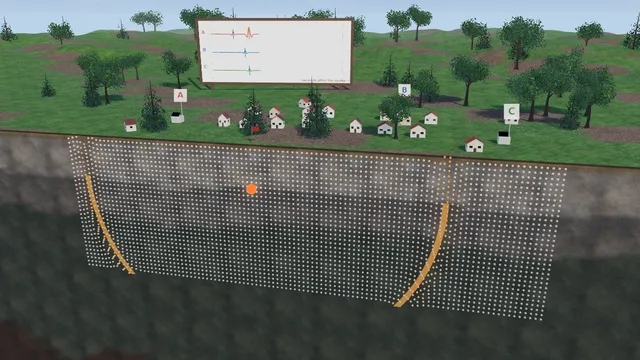
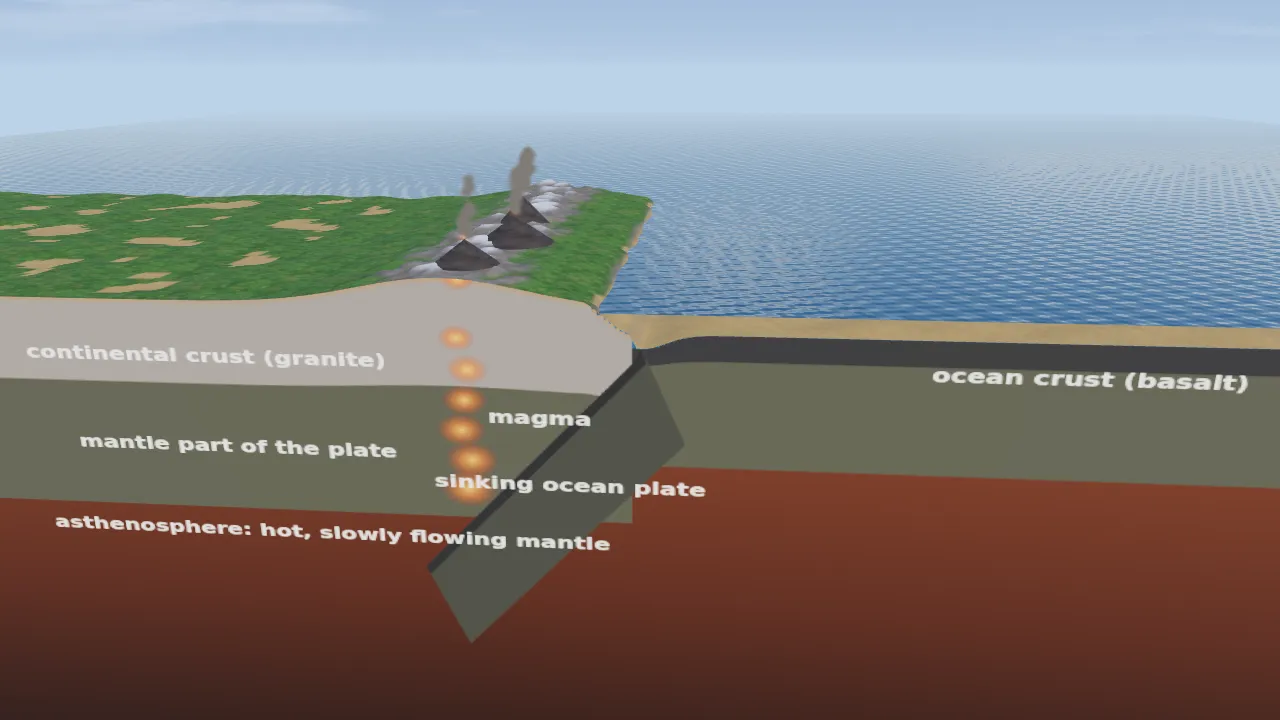
- Watch the cut face: the crust thickens into a root under mountains, thins under a rift, or sinks as a slab under a continent.
- Try the three Challenges, or open Lab to choose the plates or start again.
Challenges
- Push two continents together until a mountain range rises over 4 km
- Pull a continent apart into a rift valley a kilometre deep
- Push an ocean plate under a continent until a chain of volcanoes erupts
Try this
- Push two continents together a long way. Once the range nears 6 km it stops climbing and spreads sideways into a high plateau, as Tibet has.
- Pull a continent apart slowly. First a valley sinks between raised shoulders, then the sea floods in and a ridge of new ocean floor appears.
- Make the right plate ocean and push. A deep trench opens at the boundary, and volcanoes appear only once the sinking plate is about 100 km down.
Fun facts
- Tectonic plates move a few centimetres a year, roughly as fast as fingernails grow.
- Under the Himalaya and the Tibetan Plateau the crust is around 70 km thick, about twice the usual thickness of continental crust.
- The East African Rift is a place where a continent is slowly being pulled apart.
- The Mariana Trench, where one ocean plate sinks beneath another, holds the deepest point of the ocean, nearly 11 km below the surface.
How moving plates build mountains, rifts and volcanoes
The Earth’s outer shell is broken into a dozen or so large plates, each around 100 km thick, that drift over the hot, slowly flowing mantle beneath. Where plates meet, push or pull apart, the land changes. This block shows the three main kinds of boundary, with the cut face revealing what happens underground.
Floating crust
Continental crust is mostly granite, which is less dense than the mantle rock below it, so the crust floats, a little like wood on water. Thicker crust floats higher and also reaches deeper. This balance is called isostasy, and it is why great mountain ranges have deep roots of crust beneath them. When two continents collide, neither can sink, so the crust crumples and thickens. India’s collision with Asia did exactly this and raised the Himalaya and the Tibetan Plateau.
Rifts and new oceans
When a continent is pulled apart, its crust stretches and thins. Thin crust floats lower, so a long valley sinks between raised shoulders, often holding lakes, as in East Africa today. If the stretching goes on, the continent breaks right through. Hot mantle rises into the gap, melts as the pressure falls, and erupts as dark basalt: new ocean floor. As the rock cools it records the direction of the Earth’s magnetic field, which flips from time to time, leaving matching stripes on both sides of the ridge.
Subduction and volcanic arcs
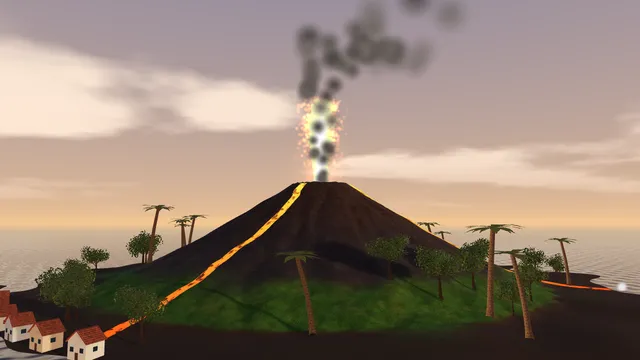
Old ocean floor is cold and dense, so when it meets a continent it sinks beneath it, bending down into a deep trench. As the sinking slab reaches about 100 km depth, water squeezed out of its rocks lowers the melting point of the mantle above. The melt rises and feeds a line of volcanoes on the continent behind the trench. The Andes and the volcanoes around the Pacific Ring of Fire formed this way.
For the curious
Under Airy isostasy the surface height of continental crust is about e = (h − 35 km)(1 − ρc/ρm) + 0.5 km, with ρc ≈ 2.7 and ρm ≈ 3.3 g/cm³, so each extra 10 km of crust raises the land by about 1.8 km and deepens its root by about 8 km. In this model collision conserves the area of crust in the cross-section, rifting thins it over a zone about 160 km wide until the continent breaks after 60 km of stretching, and an ocean plate sinks at 35°, starting an arc once its tip passes 100 km depth. At 5 cm a year, 100 km of plate motion takes about two million years.
Questions people ask
What are tectonic plates?
They are the large rigid pieces of the Earth’s outer shell, the crust together with the top of the mantle, about 100 km thick. They move slowly over the hotter, softer mantle below, carrying continents and ocean floors with them.
How do mountains form?
Many great ranges form where two continents collide. Continental crust is too light to sink, so it crumples and thickens. Because the thick crust floats higher on the mantle, the land rises into mountains, with deep roots of crust beneath them.
Why do volcanoes form near ocean trenches?
At a trench an ocean plate sinks into the mantle. When it reaches about 100 km depth, water released from the sinking rocks makes the hot mantle above it melt. That molten rock rises and erupts as a line of volcanoes.