Coral Reef Aquarium
Feed reef fish, visit the clownfish and see how heat bleaches corals.
How to play
- Tap the water above the reef to drop a pinch of food, and the fish rush in to feed.
- Tap a clownfish and it dives deep into its anemone, safe among the stinging tentacles.
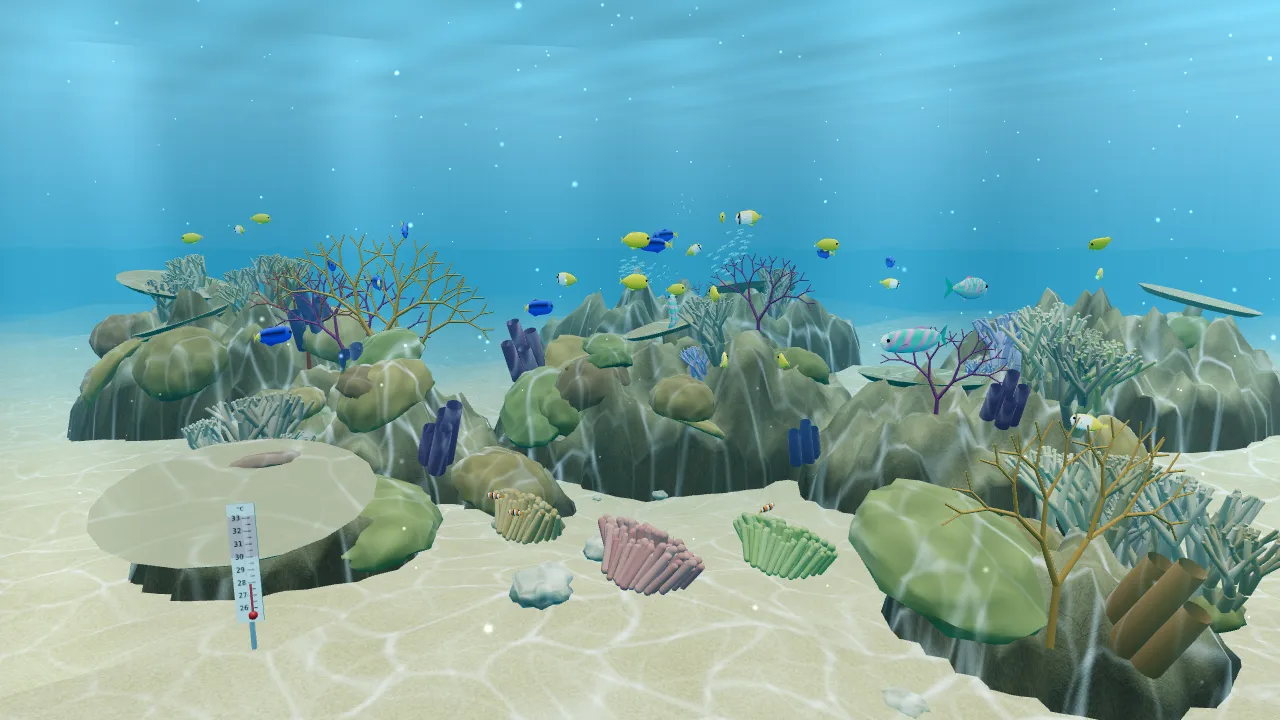
- Drag the red column of the thermometer on its stake to warm or cool the water, and keep an eye on the heat stress readout.
- Open Lab for the same controls as buttons. Drag empty water to look around; pinch or scroll to zoom.
Challenges
- Drop some food and draw a crowd of 20 fish feeding at once
- Warm the reef until the corals start to bleach
- Cool the water in time and nurse the bleached corals back to colour
Try this
- Raise the temperature to 31 °C and wait. Heat stress builds up week by week, and the corals start to turn white once it passes about 4 °C-weeks.
- After the corals have bleached, cool the water back to 28 °C. The heat stress fades over several simulated weeks and the corals slowly regain their colour.
- Set the temperature to 29.5 °C. That is warm, but less than 1 °C above the usual summer maximum, so heat stress does not build up at all.
Fun facts
- Reef-building corals are animals. Their tissues are full of microscopic algae that make food from sunlight and give corals much of their colour.
- Coral bleaching happens when heat-stressed corals expel these algae, leaving their tissue nearly transparent so the white skeleton shows through.
- Clownfish live among the stinging tentacles of sea anemones, protected by a layer of mucus on their skin.
- Clownfish can change sex: in a group living in one anemone, the largest fish is the female, and if she disappears the largest male becomes female.
Why warm water turns corals white
A coral reef is built by tiny animals called coral polyps, each no bigger than a pea or a fingernail in many species. They lay down skeletons of calcium carbonate that pile up, over centuries, into reefs. But corals don’t live alone. Inside their tissues live vast numbers of single-celled algae that photosynthesise, sharing sugars with the coral in exchange for shelter and nutrients. This partnership is why reefs thrive in clear, nutrient-poor tropical water.
Bleaching
The partnership is sensitive to heat. When the water stays warmer than the corals are used to, the algae start producing harmful by-products and the coral expels them. Without its algae the coral’s tissue is almost clear, so the white skeleton shows through: the coral has bleached. A bleached coral is still alive and can recover if the water cools soon enough and the algae return. If the heat lasts too long, it may starve or be overgrown by seaweed.
Degree heating weeks
Ocean scientists track heat stress with degree heating weeks, which combine how much hotter than usual the water is with how long it stays that way. Each week the water spends at least 1 °C above the usual summer maximum adds that excess to the total. Heat stress of about 4 °C-weeks is linked to significant bleaching, and about 8 °C-weeks to widespread bleaching and coral deaths. The reef here works the same way: warm the water and the heat stress readout climbs, and the corals pale once it passes 4.
Who lives here
Every fish on the reef has a role. Tangs and parrotfish graze algae that would otherwise smother corals. Parrotfish bite and grind coral rock, turning it into sand. Clownfish shelter among anemone tentacles, and the anemone may benefit from the clownfish’s cleaning and nutrients. Damselfish called chromis gather in clouds above coral heads and dive into the branches when threatened.
For the curious
In this simulation one second is one day. Whenever the temperature T is at least 1 °C above the usual summer maximum of 29 °C, heat stress grows at (T − 29) °C per week, and it fades with a twelve-week time constant, a simple stand-in for the twelve-week window that real degree heating weeks cover. The fraction of coral colour lost follows a smooth curve from 3.5 to 9 °C-weeks, and corals regain colour more slowly than they lose it. Fish switch between schooling, roaming between coral heads, grazing, staying with an anemone, and rushing to food that you sprinkle.
Questions people ask
What causes coral bleaching?
Mainly water that stays warmer than usual for weeks. Heat-stressed corals expel the microscopic algae living in their tissues, which provide much of their food and colour, so the white skeleton shows through. Bleached corals can recover if conditions improve in time.
What are degree heating weeks?
A measure of accumulated heat stress used to forecast coral bleaching. Every week that the water is at least 1 °C above the usual summer maximum adds the excess temperature to the total. Around 4 °C-weeks is linked to significant bleaching, and around 8 to severe bleaching and coral death.
Why don’t sea anemones sting clownfish?
Clownfish are covered in a layer of mucus that protects them from the anemone’s stinging cells. They shelter among the tentacles, safe from predators, and the anemone may benefit from the clownfish’s cleaning and the nutrients it brings.