Butterfly Garden
Plant pots of flowers and see which British butterflies come to feed.
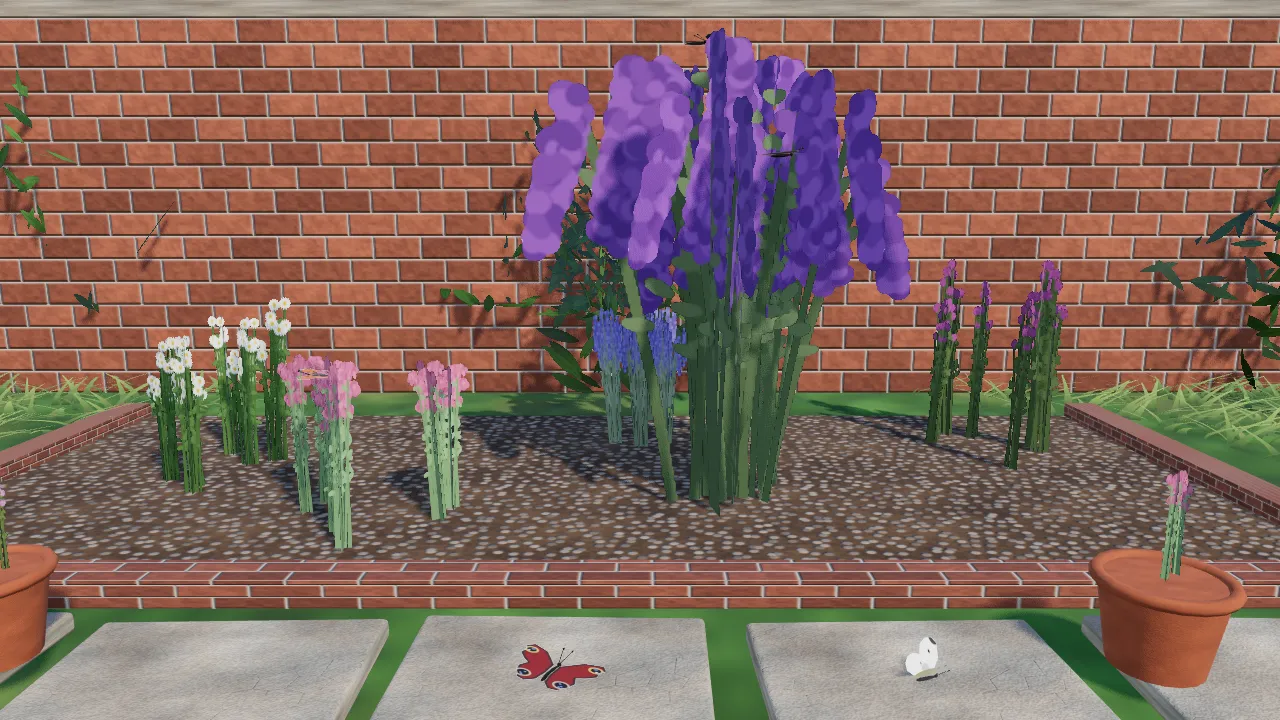
How to play
- Drag a flower pot from the path into the bed of bare soil to plant it. The plants grow in and start to bloom.
- Butterflies arrive for the flowers they like best and sip nectar with their wings closed.
- When a cloud passes, the butterflies cool down. In the sunshine afterwards they settle to bask until they are warm enough to fly.
- Tap a butterfly to learn its name and what it is doing. Open Lab to change the air temperature or stop the clouds.
Challenges
- Get five butterflies in the garden at once
- Plant a pot and see a butterfly feed from your flowers
- Spot a butterfly basking with its wings spread open, and tap it
Try this
- Plant the buddleja first. It is called the butterfly bush for a reason: red admirals, peacocks and tortoiseshells all go for its long purple spikes.
- Turn the air temperature down to 13 °C in the Lab. The butterflies cool quickly and spend much more time basking, just as they do on a cool spring morning.
- Watch a brimstone and a small white when they bask. The brimstone never opens its wings at rest; it tilts them side-on to the sun. The small white holds its wings in a V.
Fun facts
- Butterflies taste with their feet. Sensors on their legs tell them whether a leaf or a flower is worth sampling as soon as they land.
- The brimstone is one of Britain’s longest-lived butterflies: an adult can live for about a year, hibernating through the winter among evergreen leaves.
- The peacock’s four eyespots can startle a bird, and when disturbed it can also make a faint hissing sound by rubbing its wings together.
- Peacocks and small tortoiseshells spend the winter as adults, tucked away in sheds, hollow trees and houses, and are among the first butterflies seen in spring.
Nectar, colour and a warm-up in the sun
A butterfly garden works because of two things a butterfly needs every day: sugar to fuel its flight and warmth to make flying possible. Plant the right flowers in a sunny spot and you supply both.
Finding the right flowers
Butterflies see colour well, including ultraviolet light that our eyes cannot detect, and many flowers carry ultraviolet patterns that guide insects to their nectar. They also smell with their antennae, picking up the scent of a flowering shrub from some distance, and they taste with sensors on their feet once they land. Each species has its favourites. Flowers made of many small tube-shaped florets packed together, such as buddleja, marjoram and the ice plant, suit butterflies well: they can stand on one flower head and probe floret after floret with their long, coiled tongue, the proboscis, which unrolls like a party blower to reach the nectar.
Cold-blooded flyers
Butterflies cannot make much heat of their own while they rest, so their body temperature follows their surroundings. Their flight muscles only work well when they are warm, well above the temperature of a cool morning. So a butterfly that has cooled down in the shade or under a cloud must warm up before it can fly again, and the quickest way to do that is to sit in the sun.
Three ways to bask
Garden butterflies bask in different ways. Red admirals, peacocks and small tortoiseshells are dorsal baskers: they spread their wings flat, often on a warm stone or path, so that sunlight falls on the dark scales near the body. The brimstone is a lateral basker: it keeps its wings closed and leans so that the side of its wings faces the sun. Whites such as the small white are reflectance baskers: they hold their pale wings in a shallow V, angled like little mirrors to bounce sunlight onto the body between them.
For the curious
In this garden each butterfly has a body temperature that drifts toward a balance set by the air temperature and the sunshine it receives, warming fastest when it basks with its wings open to the sun and slowest when the sun is behind a cloud. Below about 24 °C it settles to bask; once it is back above 28 °C it flies off to feed. The flower choices are a simple table of each species’ preferences, weighted by how close each bloom is. Real butterflies also need the right food plants for their caterpillars, such as nettles for peacocks, red admirals and small tortoiseshells, so a wild corner helps as much as a flower bed.
Questions people ask
Why do butterflies bask in the sun?
To warm up. Butterflies are cold-blooded, and their flight muscles only work well when they are warm. Sitting in sunshine, often with their wings angled to catch the light, raises their body temperature until they can fly.
What flowers attract the most butterflies?
Flowers rich in nectar with many small, tube-shaped florets, such as buddleja, marjoram, lavender, ice plant and Michaelmas daisies, are visited by many garden butterflies. A sunny, sheltered spot helps, and so do caterpillar food plants such as nettles.
Do butterflies really taste with their feet?
Yes. Butterflies have taste sensors on their feet that let them sample a surface as soon as they land. Females use them to check that a leaf is the right food plant before laying eggs on it.