Beaver Dam
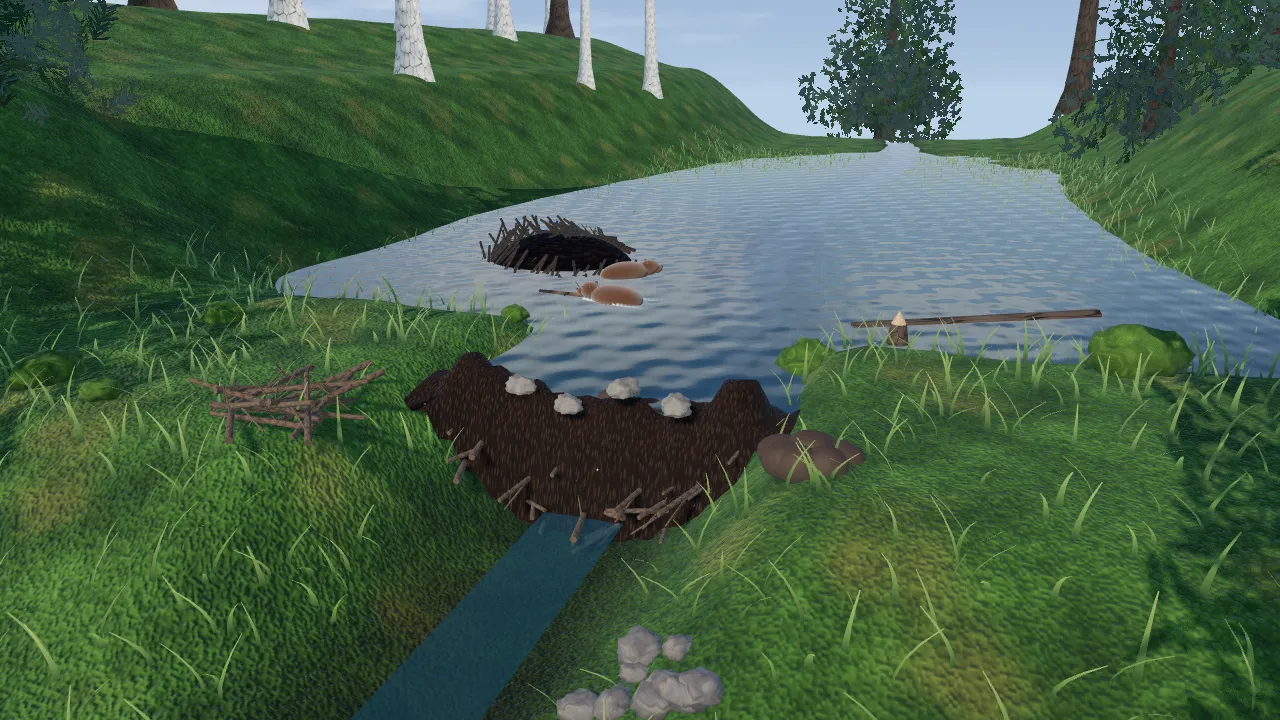
Build a beaver dam from branches and mud and raise a forest pond.
How to play
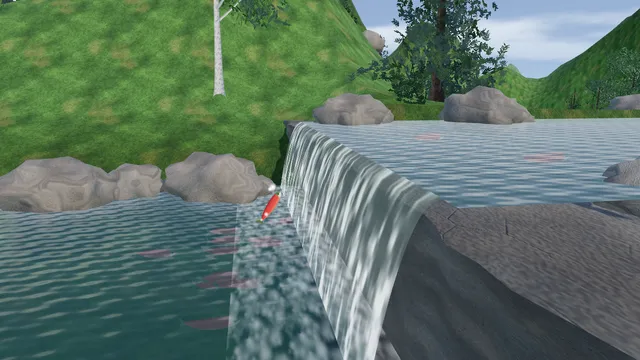
- Drag branches from the pile into the gap between the two banks. Each one raises the dam, but water still leaks between them.
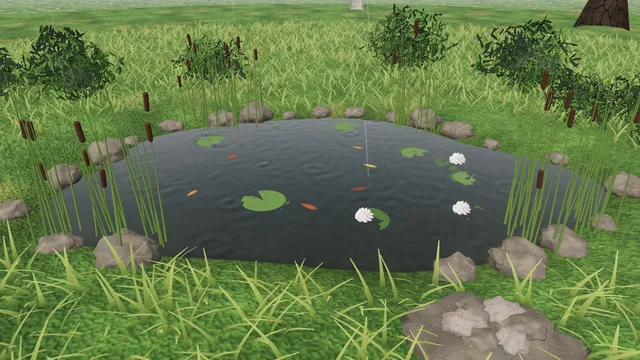
- Drag mud onto the dam to seal the leaks, and stones for weight. The pond behind it rises and spreads across the meadow.
- Drop branches on the bank near a beaver and it carries them to the dam, right where the water runs strongest. The beavers also plaster leaks with mud.
- Tap the sky for a rain shower, or tap a beaver. Try the three Challenges; Lab has a rain button too.
Challenges
- Build a dam that raises the water 30 cm
- Make the pond deep enough to hide the entrance to the beavers’ lodge
- Keep a full pond through a rain shower without the dam overtopping
Try this
- Build a dam of branches only. The water rises a little and then stops, because it leaks out through the gaps as fast as the stream brings it in.
- Now add mud. The leaks shrink, so the pond has to rise higher before the outflow matches the inflow again.
- Call a rain shower when the pond is full and watch the readouts: the stream triples, yet the level creeps up slowly because the wide pond stores the extra water.
Fun facts
- Beavers are the largest rodents in Europe and North America. Only the capybara of South America is bigger.
- A beaver’s front teeth are orange because their enamel contains iron, which helps make them tough.
- The entrances to a beaver lodge are under water, so the beavers can come and go even when the pond is frozen over.
- Beaver ponds hold back water and release it slowly, which can soften floods downstream and keep streams flowing through dry spells.
How beavers build dams, and why the pond rises
Beavers are famous engineers. By damming a stream with branches, mud and stones they turn a trickle into a pond. The pond keeps the entrances of their lodge under water, out of reach of predators, and lets them swim to their food instead of walking through the woods.
Building a dam
A beaver usually starts where the stream is narrow, pushing branches into the bed and laying more across them. It packs the gaps with mud and plant material scooped from the bottom and carried in its front paws, and adds stones for weight. Beavers listen as they work: the sound of rushing water tells them where the dam leaks, and they bring more material to exactly that spot. In this scene the beavers do the same, carrying your branches to the part of the dam where the most water is getting through.
Why the pond rises, and where it stops
Think of the pond as a bucket with a leaky wall. The stream pours water in at a steady rate. Some seeps through the gaps in the dam and, if the pond is high enough, some spills over the top. The deeper the pond, the harder the water presses on the dam and the faster it leaks. So the pond rises until the water leaving through and over the dam exactly balances the water arriving. A dam of bare branches leaks so freely that the pond rises only a little. Seal the branches with mud and the leaks shrink, so the pond must climb higher before the outflow catches up.
Floods and storage
The shape of the valley matters too. Here the stream squeezes between two banks, so a short dam holds back water spread across a wide meadow. Every centimetre of rise stores a lot of water. When a rain shower swells the stream, that wide pond soaks up much of the extra water, so its level climbs slowly and the dam passes the flood on gently. Scientists studying real beaver ponds have found the same thing: they can slow and soften floods downstream and keep water flowing in dry weather.
For the curious
The simulation measures the pond’s area at every level from the terrain and integrates dV/dt = Qin − Qout, with a base inflow of 40 litres a second. The dam is split into 14 strips, each 20 cm wide. Water spills over a strip like a broad-crested weir, Q = 1.7·w·H3/2 in SI units, where H is the depth of water above the crest, and seeps through the submerged part at a fraction P of that rate. Each branch raises the crest by about 7.5 cm and each load of mud by 3.5 cm, but mud needs a frame of branches or stones to cling to, and P falls as the mud fills the gaps. A rain shower triples the inflow for 20 minutes. Time for the water runs 30 times faster than real time.
Questions people ask
Why do beavers build dams?
To make a pond deep enough to be safe. The entrances to a beaver lodge are under water, out of reach of most predators, and a pond lets beavers float branches home and store food under the ice in winter.
How do beavers know where their dam leaks?
They respond to the sound and feel of running water. Where water rushes through a gap, they add branches and mud until the noise stops.
Are beaver dams good for rivers?
Often, yes. Beaver ponds create wetlands for frogs, insects, fish and birds, trap silt, store water through dry spells and can slow floods. They can also flood farmland or roads, so in some places people manage beavers or fit pipes through dams to control the water level.